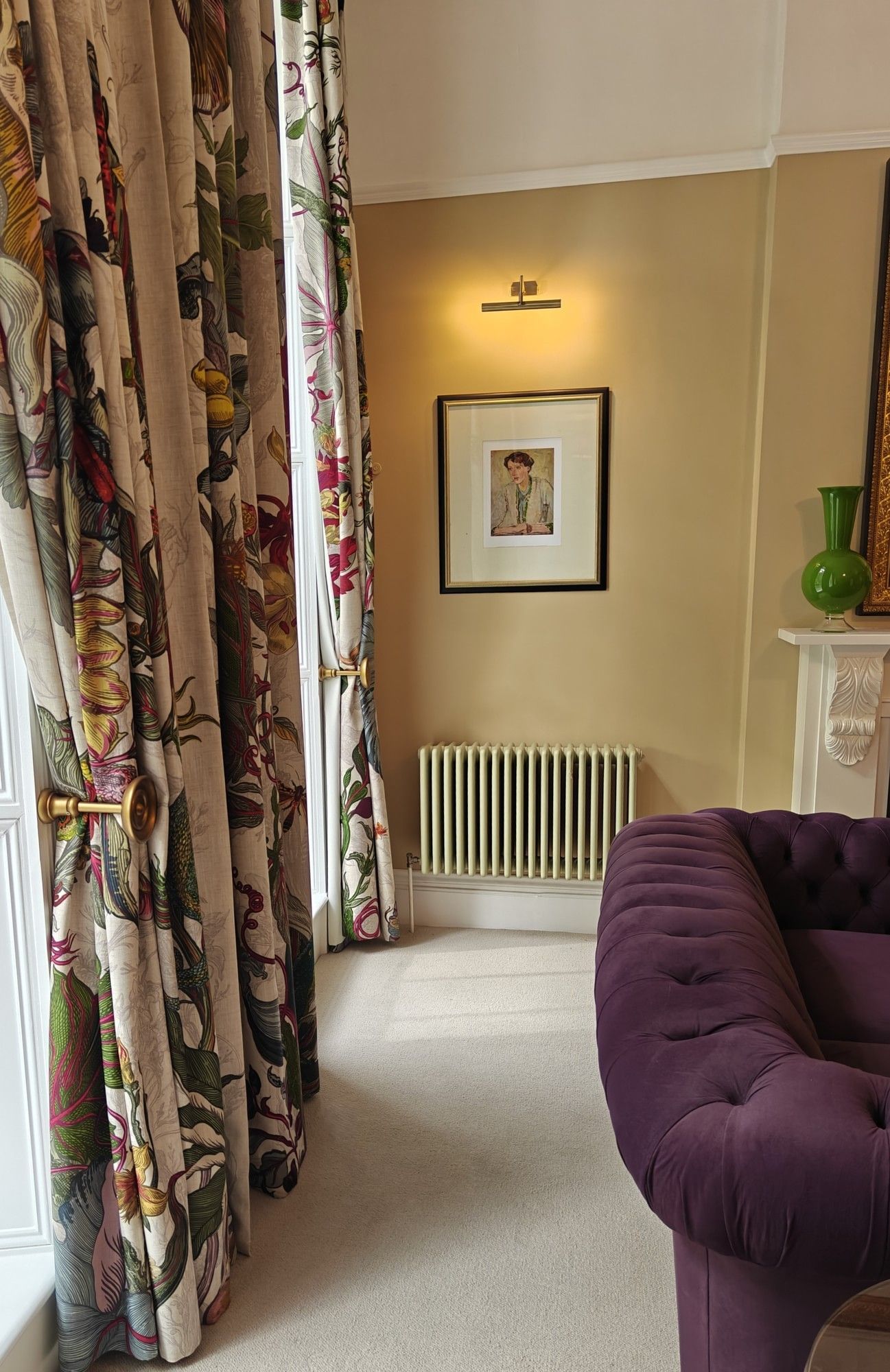
Much of this intellectual life unfolded here in Bloomsbury. The Bloomsbury Group gathered in drawing rooms only a short walk from this hotel, believing that friendship, art and honest conversation were more valuable than rigid social convention. Their influence reached far beyond literature into painting, economics, philosophy and design, helping to redefine British cultural life in the first half of the twentieth century.
Among the most significant relationships of Woolf's life was her friendship, literary partnership and love affair with Vita Sackville-West. Their correspondence reveals a profound mutual admiration, while Vita inspired one of Woolf's most joyful novels, Orlando, a playful exploration of identity, history and gender that remains remarkably modern today. Together, they encouraged one another to write more boldly and to live more freely.
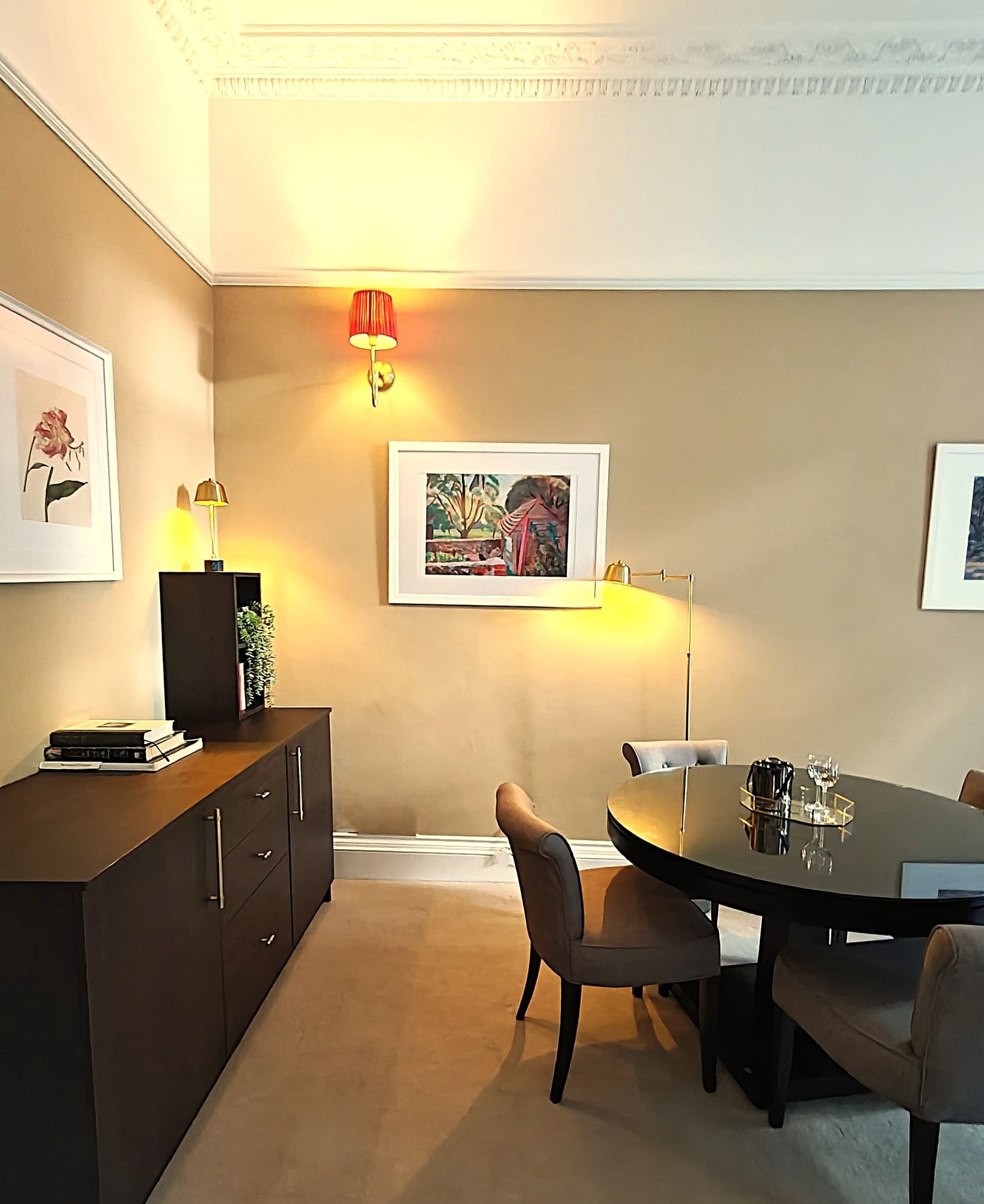

A conversation between artists, writers, friends and family
The artwork draws us further into Woolf's Bloomsbury world. Vanessa Bell's portrait of her sister Virginia sits alongside Roger Fry's portrait of the poet Edith Sitwell, another striking and unconventional woman of Britain's modernist literary scene. A portrait of Leonard Woolf, also painted by Bell, brings another important figure into the room: Virginia's husband, intellectual partner and co-founder of the Hogarth Press.
Bell and Fry were themselves central figures in the Bloomsbury Group, and their presence continues through two landscapes: Roger Fry's Chiswick House and Vanessa Bell's Garden at Hampstead. These quieter views of London provide a counterpoint to the portraits and to the exuberant fabrics of the room, reflecting Bloomsbury's fascination with art, domestic life, landscape and the everyday.
The botanical prints feature Rosa gallica 'Tuscany' and Lilium speciosum, two flowers especially loved by Vita Sackville-West. They pay tribute not only to Vita's extraordinary White Garden at Sissinghurst, but also to her lifelong passion for horticulture, writing and design.
Together, the works create something of a conversation between the people who inhabited Woolf's world: writers painted by artists, friends painting friends, a sister painting a sister and a wife painting her brother-in-law. Rather than simply illustrating Virginia Woolf's life, they offer a glimpse into the extraordinary network of relationships, ideas and creative exchange from which so much remarkable twentieth-century art and literature emerged.